Program Development and Delivery Quarterly Report
Program Development and Delivery – Quarterly Report
By Jacob Gerke, General Manager Program Development and Delivery
The joint funding partnership between the Tasmanian and Australian Governments and Tasmanian landowners is enabling a number of new irrigation projects to be progressed by Tasmanian Irrigation:
Northern Midlands Irrigation Scheme
More than 125 kilometres of pipe has now been welded and installed on the Northern Midlands Irrigation Scheme out of a total of 154km. The Vinidex factory at Wynyard has been operating 24/7 and has completed manufacturing of all the NMIS pipe and moved immediately to production of pipeline for the SWISA project.
The Poatina pump station is complete and ready for energisation, and the 650-megalitre Poatina buffer dam remains unfilled while we wait for the pipeline to be installed linking this dam to the remainder of the scheme.
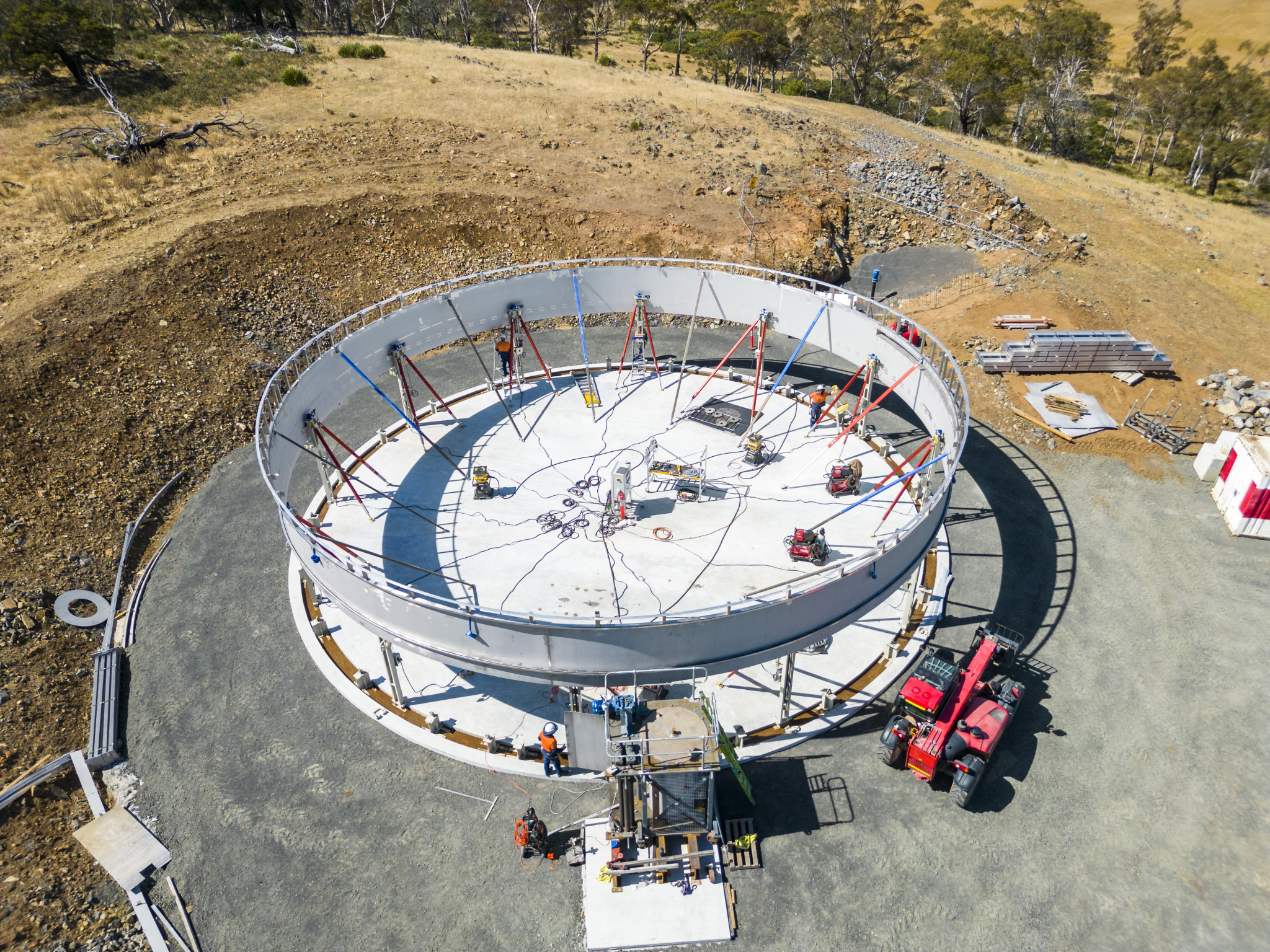
The stainless-steel balance tank at Valleyfield - one of the largest ever constructed in Tasmania - is almost complete and crews will soon transition to the Poatina balance tank to commence welding work there.
During the construction tender for the project, Tasmanian Irrigation asked the contractors to develop options that would provide TI with the best design life for the balance tanks. We worked closely with Hazell Bros to investigate a range of options including concrete, steel lined and epoxy coated steel before landing on stainless steel as the preferred design.
Hazell Bros worked with local subcontractors to procure and construct the 6mm stainless steel, which is unrolled from a coil then jacked up to height using a custom-built jacking system.
The project remains on track to be ready to deliver water in time for the 2026/27 irrigation season.
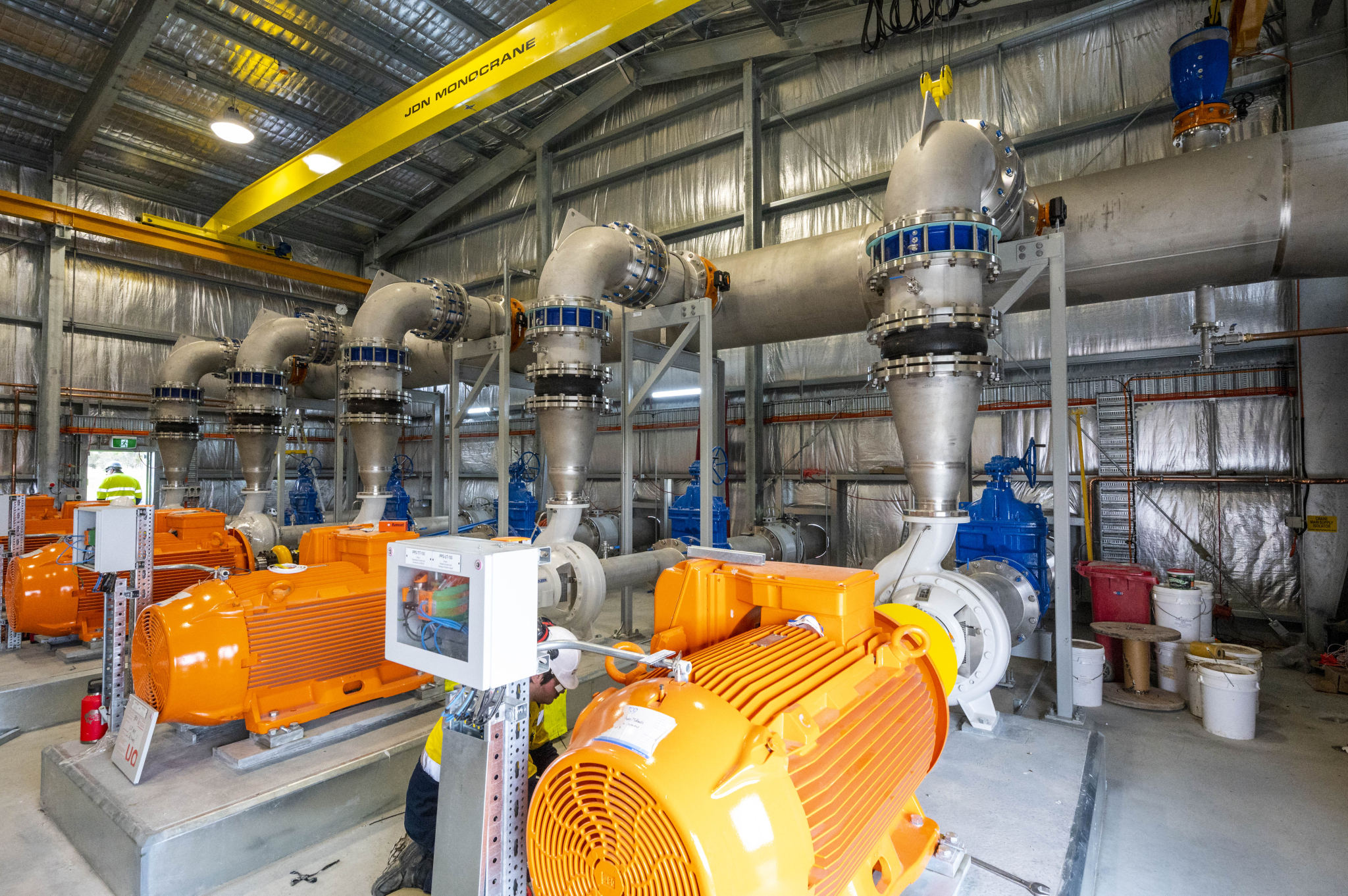
The Poatina pump station
Sassafras Wesley Vale Irrigation Scheme Augmentation
More than five kilometres of pipe has now been installed as part of the augmentation of the $124.2 million Sassafras Wesley Vale Irrigation Scheme. This project will almost triple the amount of water available to farmers in the region, and the start of construction was celebrated on farm last weekend by representatives of the Australian and Tasmanian Governments, farmers and Tasmanian Irrigation.
The Sassafras Wesley Vale Irrigation Scheme was commissioned in November 2012, delivering 5,660 megalitres of high-surety water to landowners in the Sassafras, Harford, Thirlstane, Moriarty, Wesley Vale, Northdown, Pardoe and East Devonport areas. The 9,200-megalitre augmentation is the result of a demonstrated increase in demand for highly reliable water for irrigation.
TI’s head contractor Shaw Contracting is currently working on the Sassafras spur pipelines, and a crew will be mobilised in the Moriarty area in mid-March to commence installing pipelines in this area. The next stage will be the Sassafras main line.
Work is also about to start on the installation of the rising main pipeline from the Great Bend pump station to the new balance tank. This will occur before the pump station refurbishment, which will commence at the close of the current irrigation season. This work over the winter months is critical, not just for the delivery of the augmentation, but also for security of supply in the interim. During the works throughout the winter months, the existing scheme will not be able to supply water. The project team has been working with existing irrigators to ensure other arrangements are in place.
More than 60 jobs are expected to be created during the construction phase with a further 210 direct and indirect full-time employment positions once the project is operational, expected to be in 2027.
Additional information about the celebration of the commencement of construction can be found here: Media Releases - Tasmanian Irrigation
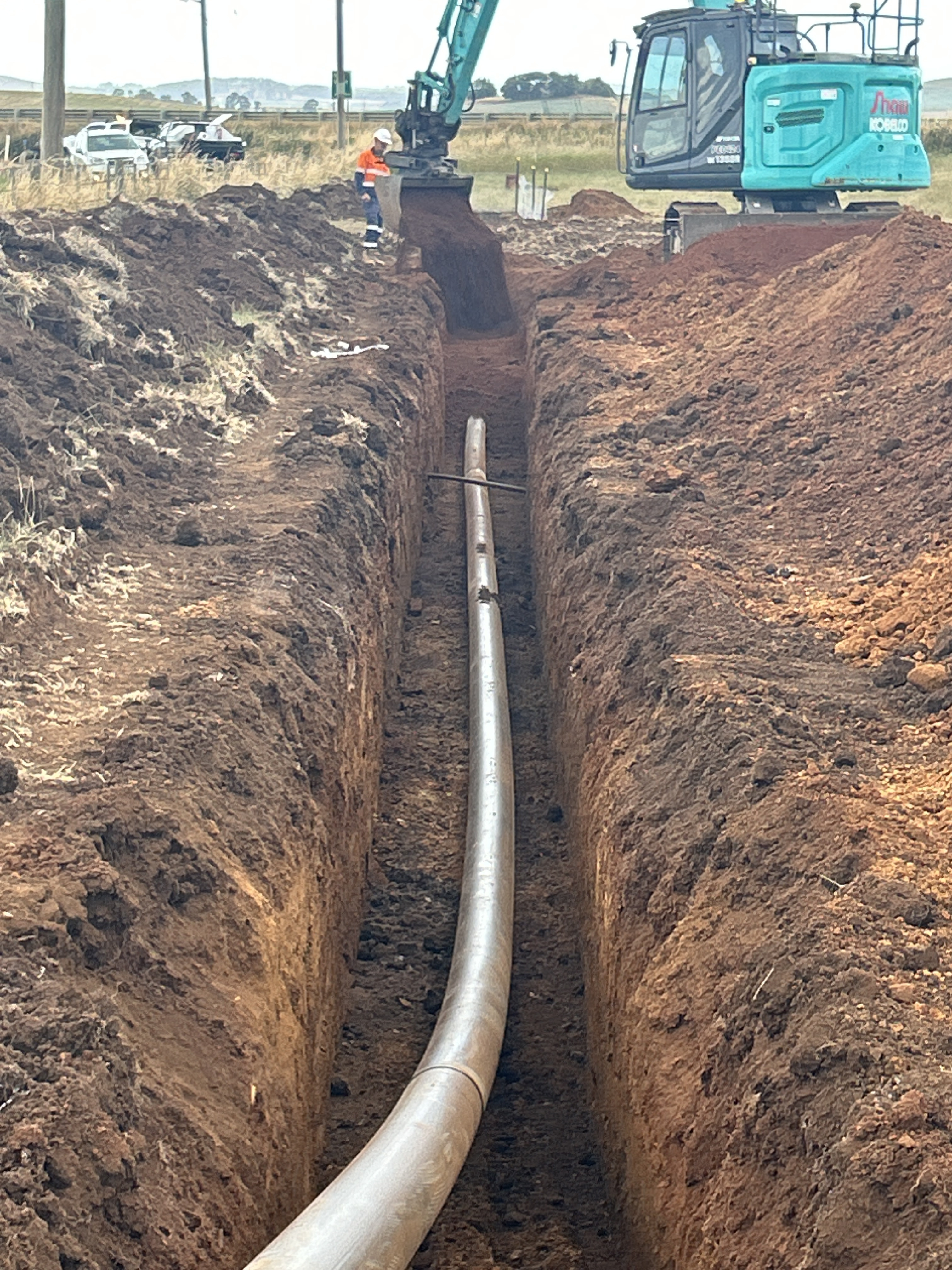
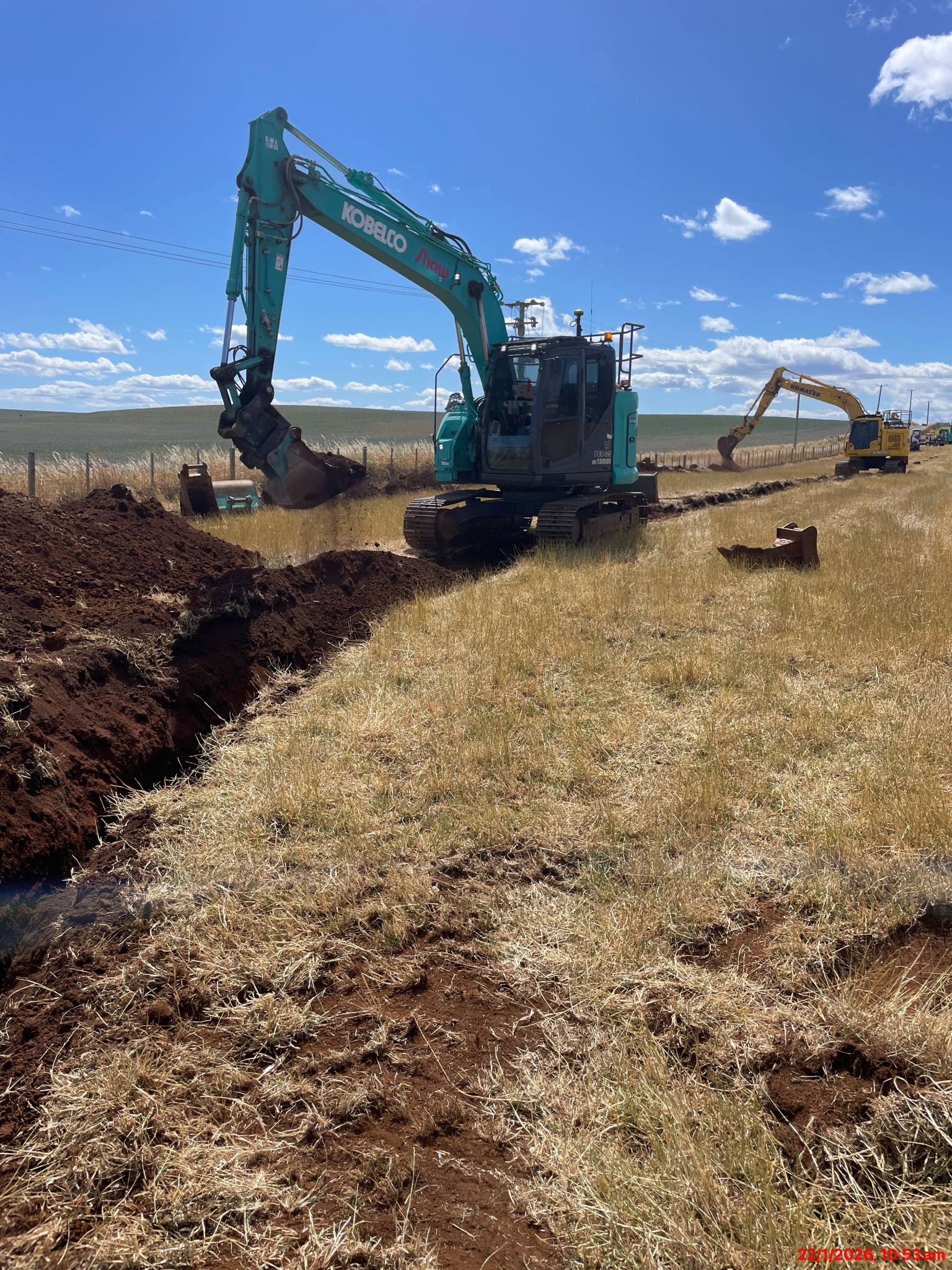
Pipe being laid near Sassafras
Greater South East Irrigation Scheme
The 37,200-megalitre Greater South East Irrigation Scheme is off to a great start in 2026.
The technical team has been busy over the spring and summer period, checking the proposed route of the pipeline and seeking to minimise impacts on landowners, the natural environmental and heritage values. It’s a balancing act to get this right, while also meeting cost and time constraints for the delivery of the project.
We will soon be sharing the proposed pipeline routes with affected landowners and the wider community, seeking feedback.
Building the right team to take forward a project of this complexity is a key focus for the GSEIS project. Recruitment is well underway to replace Project Manager Lorrienne Lyte, who finished with TI last week, and Landowner Liaison Officer Liesa Kennedy, who has just retired. Ayla Richardson recently joined the GSEIS as a Project Officer and will be assisting us with the myriad of documentation and administration tasks.
Read about the GSEIS recruitment progress here: Building the GSEIS Team - Tasmanian Irrigation.
A key element of the project is the Meadowbank pump station that supplies all the water for the project. We are currently working with Hydro Tasmania and the adjacent private landowner on siting and design of the pump station. Other project priorities are progressing the environmental studies required to support approval of the project under the Commonwealth EPBC Act, finalising the scheme design to reflect current and expected future water sales, and stepping up our engagement with landowners and the wider community.
Construction of the Greater South East Irrigation Scheme is forecast to commence in early 2028 and first water is expected to flow in mid-2030.
Tamar Water Scheme
Tasmanian Irrigation is working with the Tasmanian Government and Renewables, Climate and Future Industries Tasmania (ReCFIT) to determine whether there is demand for water from an industrial (hydrogen) proponent at a level that would make the scheme viable, and on commercial terms.
This work continues and if a proponent is confirmed, funding would be pursued for the design and approvals phase of the Tamar Water Scheme project.
The decision to refund water entitlement deposits to irrigators was a good faith measure taken by Tasmanian Irrigation because the future of the project is not sufficiently clear, and in recognition that deposits have been held for a long period of time – in some cases, as long as three years. Applications for water entitlements are retained on file, and irrigators would be asked to reconfirm interest in water in the Tamar Water Scheme if the project proceeds.
Tasmanian Irrigation has been confirmed as a member of ReCFIT’s Tasmanian Green Hydrogen Hub (TGHH) Consortium Working Group, which recently met for the first time. We also met with George Town Council’s Indigenous Engagement representative to discuss Aboriginal engagement should the project proceed.